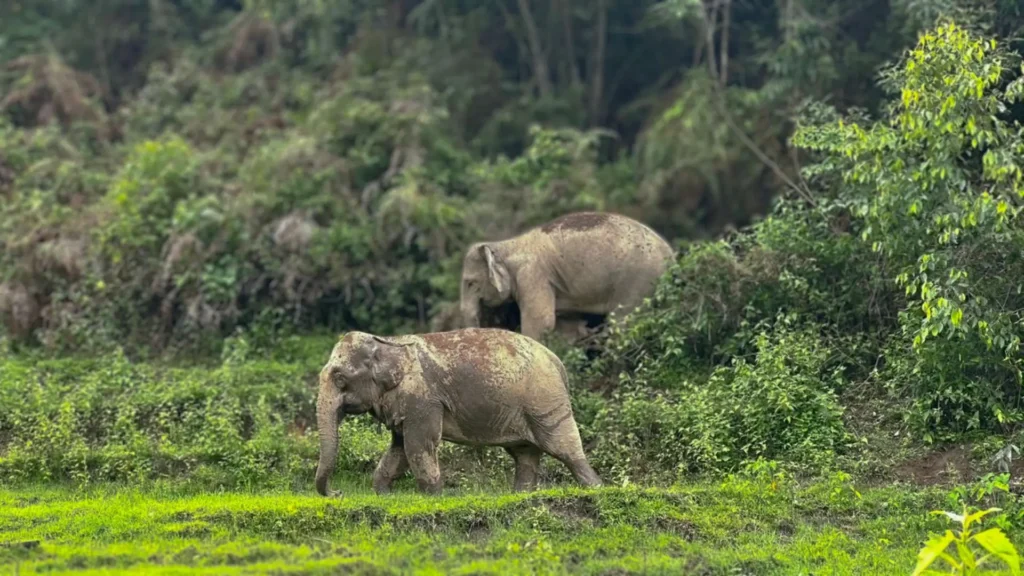
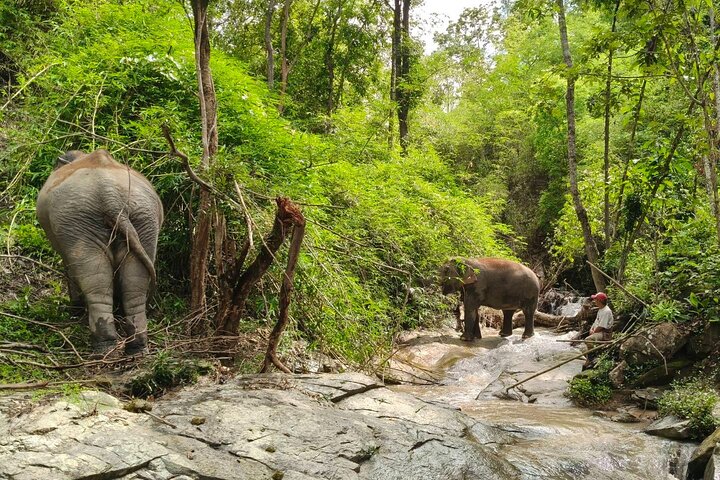
The most reliable sign of an ethical elephant sanctuary in Chiang Mai is simple: no riding, no bathing, and no performances, with elephants free to roam, forage, and socialize while you watch from a respectful distance. The word "sanctuary" isn't regulated, so the activities on offer tell you far more than the name does.
Chiang Mai has dozens of elephant parks, and many use words like "ethical," "rescue," and "sanctuary" while still offering rides or hands-on shows. Here's how to tell the genuine ones apart.
No riding — at all
This is the clearest line. An ethical sanctuary never offers elephant rides, with or without a saddle. Elephants' spines aren't built to carry weight, and the training behind riding relies on fear. If rides are anywhere on the menu, the welfare standard isn't there.
No bathing or forced hands-on contact
Bathing programs look gentle but mean elephants are handled and crowded by new groups of strangers all day, every day. The most welfare-focused places have moved away from bathing, hugging, and feeding-on-demand. Watching an elephant choose to bathe in mud on its own is very different from being told to scrub one in a pool.
No shows, tricks, or painting
Painting, football, balancing, and other "talents" are trained behaviors that aren't natural and usually involve the bull-hook. A genuine sanctuary lets elephants be elephants, not entertainers.
Space to roam and a real herd
Look for elephants that can walk through forest or open land, graze freely, and spend time with other elephants. Animals kept chained between activities, or isolated, are a red flag. Natural foraging and social bonding are the heart of good welfare.
Transparency about the elephants' histories
Ethical places know and share each elephant's background — where they were rescued from, their age, their personality, their quirks. If the staff can tell you the individual stories, it usually means the animals are genuinely cared for as individuals.
Reasonable group sizes and a knowledgeable guide
Smaller groups mean less stress for the elephants and a better experience for you. A good guide explains behavior and conservation rather than orchestrating photo ops. Education is part of the point.
Licensing and a community benefit
Proper sanctuaries operate legally and often support the surrounding community — caretaker wages, local hill-tribe villages, schooling. Your booking fee should be funding care, not a show.
Red flags to avoid
- The word "sanctuary" but rides or bathing are still offered.
- Elephants performing tricks or painting.
- Elephants chained or alone between sessions.
- Bull-hooks used routinely by handlers.
- Vague or evasive answers about where the elephants came from.
What an observation-only visit looks like
At an observation-only sanctuary like EVE79 in the Mae Wang valley, about an hour from Chiang Mai, a visit means walking forest paths and viewing platforms while rescued elephants roam, graze, and rest at their own pace. A guide shares each elephant's story, and your booking supports their care, their caretakers, and the local hill-tribe community. There's no riding, no bathing, and no shows — just real elephant life.
Frequently asked questions
Is "sanctuary" a protected word in Thailand?
No. Any elephant business can call itself a sanctuary, which is why you should judge by the activities offered, not the name.
Are ethical sanctuaries more expensive?
Sometimes slightly, because caring for elephants without using them for rides or shows costs money. But prices are usually comparable, and you're funding genuine care.
Can I still take photos?
Yes — you'll get beautiful, natural photos of elephants being themselves. You just won't be posing on top of them or in a pool with them.
How far are ethical sanctuaries from Chiang Mai city?
Many of the best are in the Mae Wang and Mae Taeng valleys, roughly 40–60 km out, about an hour to ninety minutes by road, with most offering hotel pickup.
See it for yourself
EVE79 is an observation-only sanctuary in the Mae Wang valley — no riding, no bathing, no shows. Watch rescued elephants live naturally, with round-trip transport from Chiang Mai included.


 Spots are limited — secure your experience now.