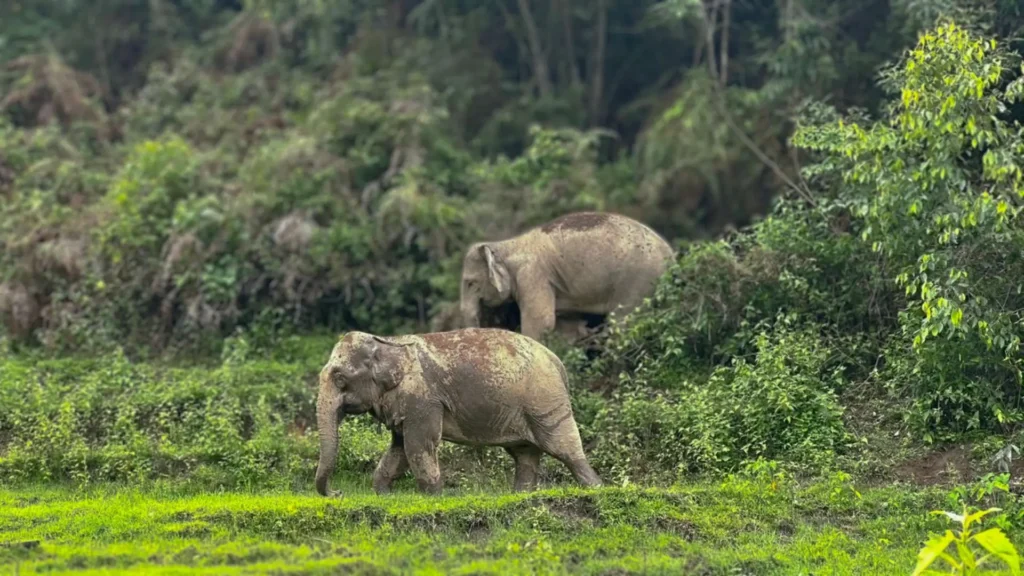

Elephants are herbivores that eat grasses, leaves, bark, roots, fruit, and bamboo — and a lot of it. An adult Asian elephant can eat up to around 150 kg of vegetation a day and drink up to 200 litres of water, spending most of its waking hours foraging. That enormous appetite is a big part of why caring for rescued elephants is so demanding.
Elephants are among the biggest eaters in the animal kingdom. Here’s exactly what fuels a giant.
What do elephants eat in the wild?
Asian elephants are plant-eaters with a varied, seasonal diet. Depending on what’s available, they’ll eat:
- Grasses — often the biggest part of their diet
- Leaves and small branches from trees and shrubs
- Bark, which provides fibre and minerals
- Bamboo, a favourite in forest habitats
- Fruit, roots, and tubers, especially when in season
Because they’re so large, elephants aren’t fussy — they browse widely and move constantly to find enough food.
How much does an elephant eat and drink each day?
An adult can spend well over half the day eating. Their digestion isn’t very efficient, so they have to eat huge volumes to get enough nutrition — which is exactly why a wild elephant needs a large range, and why a captive one is so costly to feed.
What do sanctuary elephants eat?
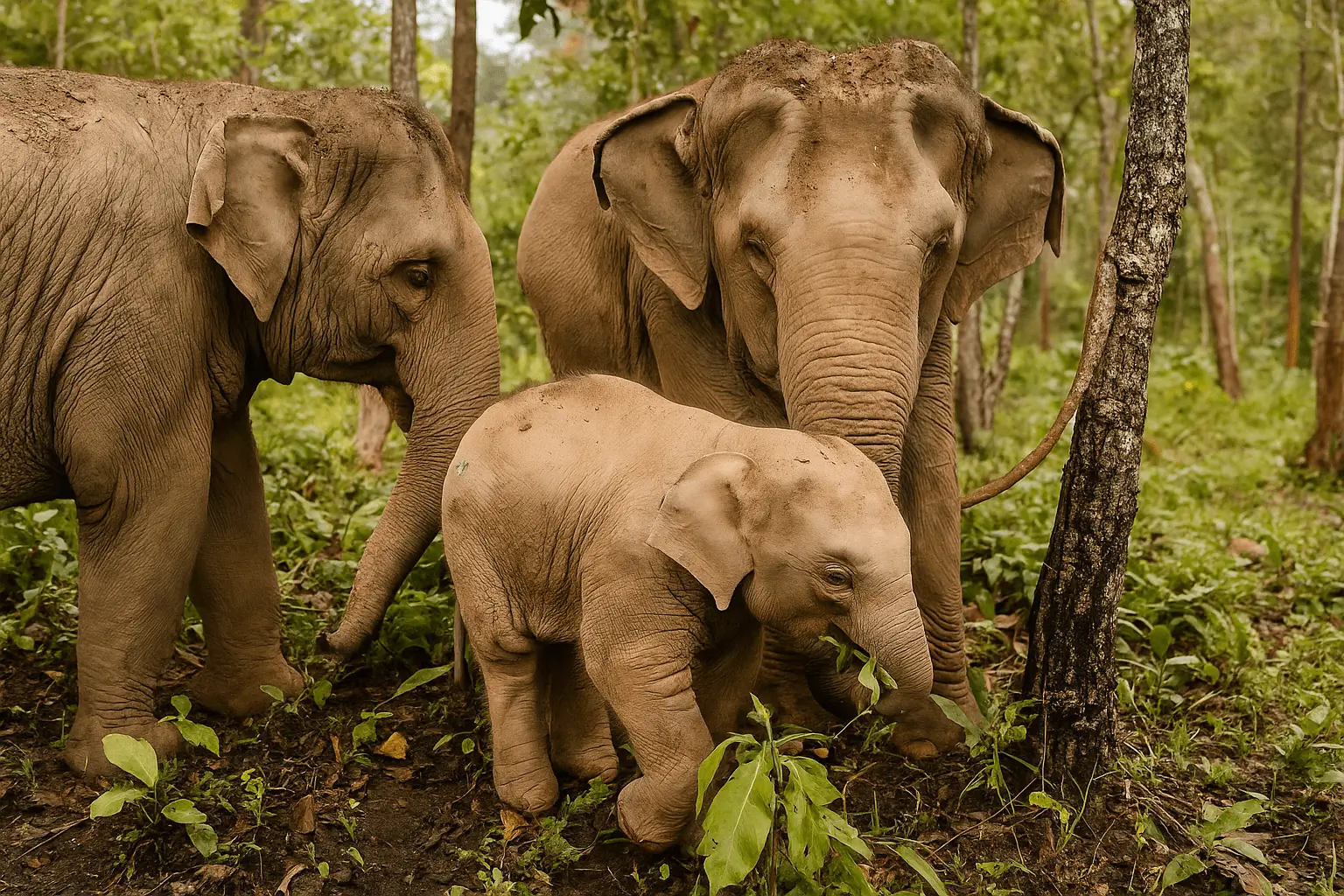
At an ethical, observation-only sanctuary, elephants forage naturally on the land as much as possible, with their diet supplemented by seasonal fruit and vegetables to keep them healthy. Crucially, they aren’t fed a constant stream of bananas by tourists all day — over-feeding on sugary treats isn’t good for them, and natural foraging is what keeps an elephant physically and mentally well. It’s one of the quieter differences between watching elephants live naturally and a hands-on elephant camp.
Why an elephant’s diet makes care so demanding
Feeding one rescued elephant means supplying enormous quantities of food every single day, year-round, on top of veterinary care and land to roam. This is the real, ongoing cost behind a genuine sanctuary — and why ethical visits can’t be the cheapest option. If you’re curious how that shapes prices, see how much an elephant sanctuary costs, and how rescued elephants come into care in the first place in how elephants are rescued.
Frequently asked questions
What do elephants eat?
Elephants are herbivores that eat grasses, leaves, bark, bamboo, fruit, and roots. Grasses usually make up the largest share of their diet.
How much does an elephant eat per day?
An adult Asian elephant can eat up to around 150 kg of vegetation and drink up to 200 litres of water daily, foraging for 12–18 hours.
Do elephants eat meat?
No. Elephants are strictly herbivores and eat only plants.
Can I feed the elephants at a sanctuary?
At an observation-only sanctuary, elephants forage naturally rather than being hand-fed by visitors all day, which is healthier for them.
What’s an elephant’s favourite food?
They enjoy fruit like bananas and sugarcane as treats, but their staple and healthiest diet is grasses, leaves, and other natural forage.
Watch them forage as nature intended
At EVE79, rescued elephants graze and roam freely in the Mae Wang valley — observation-only, transport from Chiang Mai included. Book your visit.

 Spots are limited — secure your experience now.