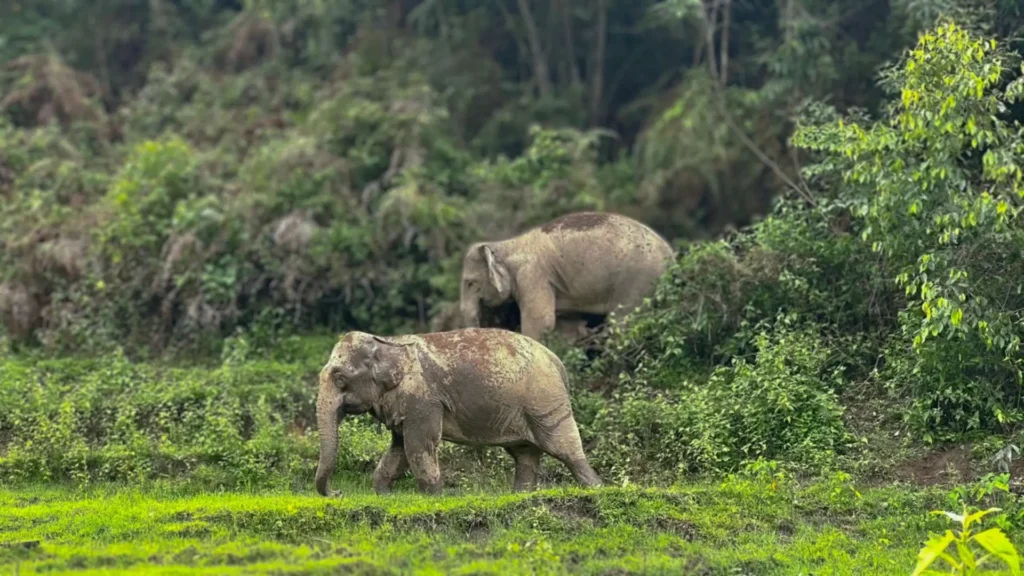

Elephants are among the most intelligent animals on Earth. They have the largest brain of any land mammal, pass the mirror self-recognition test (a rarity shared only with great apes, dolphins, and magpies), solve problems cooperatively, and show clear signs of grief, empathy, and long-term memory. This is exactly why forcing them to ride or perform is so harmful — it’s not just physical, it’s an intelligent, emotional animal being denied a natural life.
Anyone who’s watched elephants closely senses there’s more going on behind those eyes than most animals. Science backs that instinct up. Here’s what researchers have actually found.
They recognize themselves in a mirror
Mirror self-recognition — understanding that your reflection is you, not another animal — is one of science’s clearest markers of self-awareness, and very few species pass it: great apes, dolphins, magpies, and elephants. In controlled studies, elephants have used a mirror to investigate a mark placed on their own body, behavior that shows they understood the reflection was themselves. Researchers link this ability to more complex empathy and perspective-taking.
They understand their own bodies as tools
A University of Cambridge study found Asian elephants could recognize their own body as an obstacle in a problem-solving task — essentially realizing “my trunk is in my own way” and adjusting accordingly. That kind of body awareness is another marker of sophisticated cognition, and it’s rare even among intelligent animals.
They solve problems and use tools
Elephants use branches to swat flies, drop objects to test water depth, and cooperate with each other to solve tasks — for example, working together to pull a rope from two ends at once to reach food, which requires understanding a partner’s role in a shared goal. This kind of cooperative problem-solving reflects real behavioral flexibility, not just instinct.
They grieve and show empathy
Perhaps the most striking evidence of elephant intelligence is emotional. Elephants have been observed investigating and gently touching the bodies of dead herd members, staying near a deceased companion for extended periods, and in some cases covering a body with soil or branches. They console distressed herd-mates and show concern for injured individuals, sometimes trying to help them stand. Researchers see this as strong evidence of empathy and an understanding of loss — something very few animals demonstrate.
They have exceptional memory
The phrase “an elephant never forgets” has real science behind it. Elephants recognize other individuals — elephant and human — after years apart, remember the locations of food and water sources across vast home ranges, and pass social knowledge down through generations, often led by an experienced matriarch.
Why this matters for how they’re treated
Understanding how intelligent and emotionally complex elephants are reframes what activities like riding, performing, or forced bathing actually cost them. These aren’t simple animals going through motions — they’re self-aware, social, deeply bonded creatures capable of distress and grief. It’s a big part of why observation-only sanctuaries exist: to let that intelligence and social complexity express itself naturally, rather than being suppressed for entertainment.
Frequently asked questions
How smart are elephants compared to other animals?
Elephants rank among the most intelligent animals, alongside great apes and dolphins. They have the largest brain of any land mammal and pass the mirror self-recognition test, a rare marker of self-awareness.
Do elephants really grieve their dead?
Evidence strongly suggests they do. Elephants investigate and touch deceased herd members, sometimes stay near a body for days, and occasionally cover it with soil or branches — behavior researchers interpret as mourning.
Can elephants recognize themselves in a mirror?
Yes. Elephants have passed the mirror self-recognition test, using a mirror to investigate a mark on their own body — one of very few species known to do this.
How big is an elephant’s brain?
An elephant’s brain weighs roughly 4.5–5.5 kg, the largest of any land mammal, compared with about 1.3–1.4 kg for an adult human brain.
Watch that intelligence in action
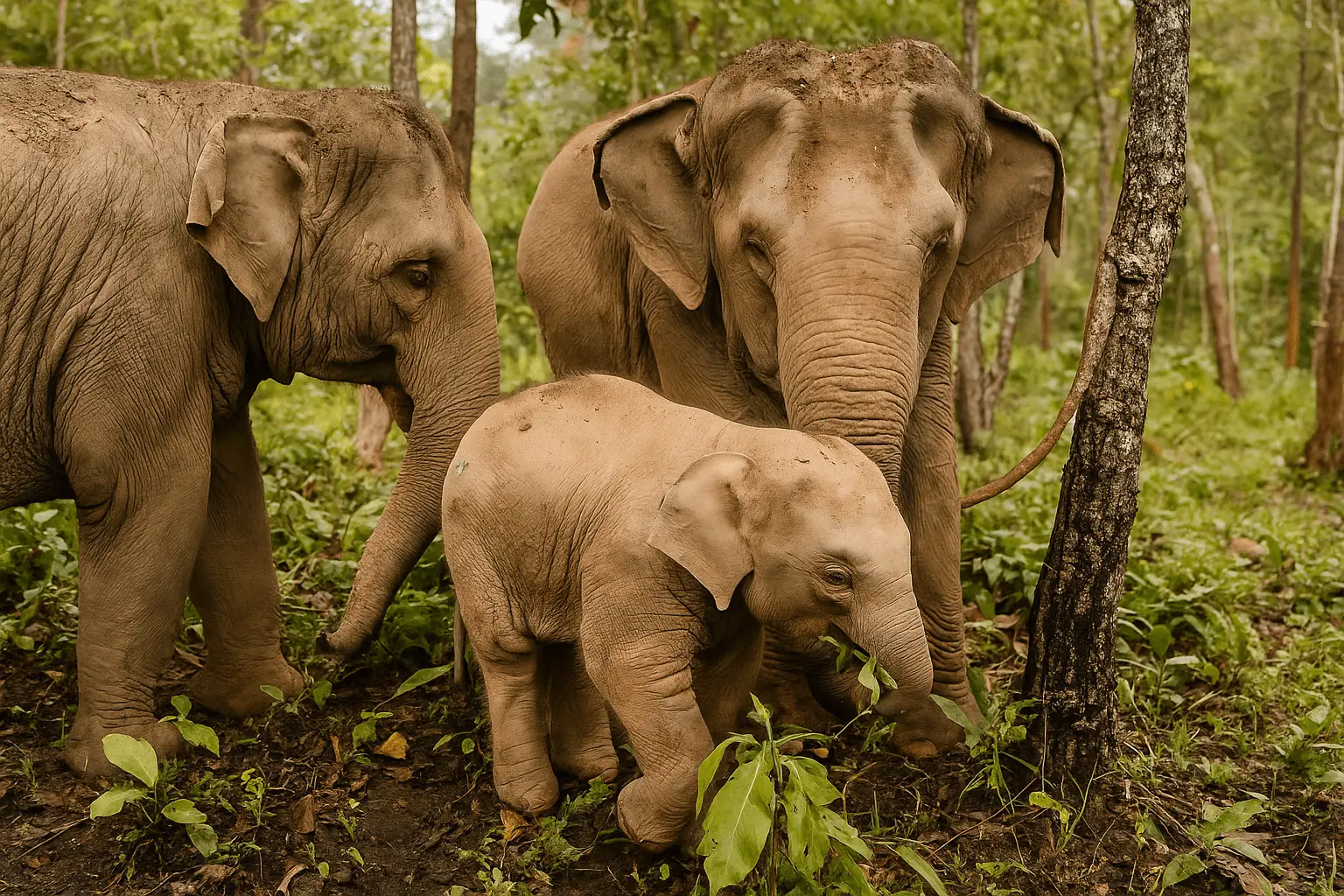
At EVE79, rescued elephants socialize, problem-solve, and bond as a herd exactly as their intelligence intends — observation-only, in the Mae Wang valley. Book your visit.

 Spots are limited — secure your experience now.