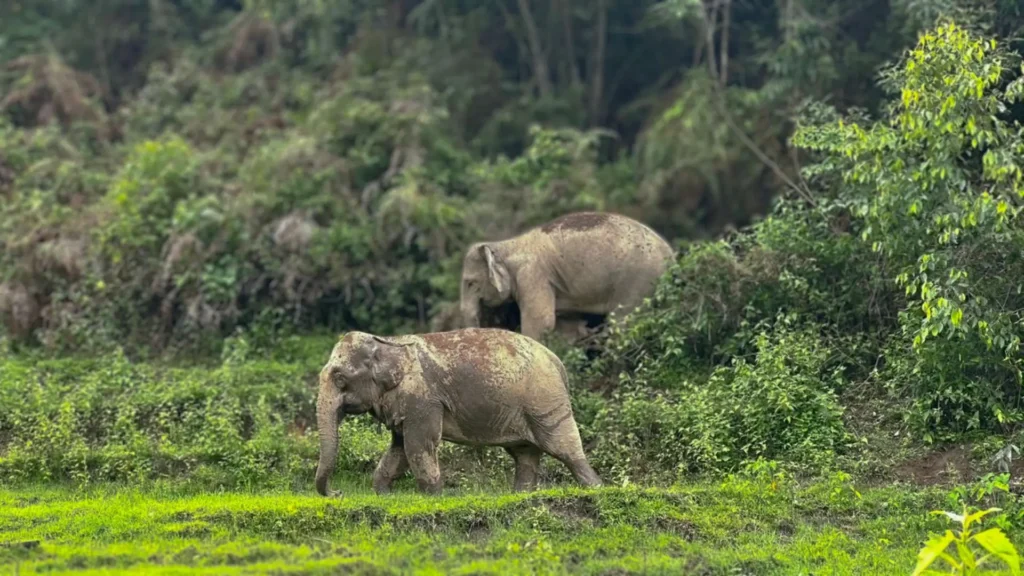

Yes — it can be ethical, if you choose the right place. Visiting an observation-only sanctuary that rescues elephants and offers no riding, bathing, or shows is a positive choice that helps fund their care. Visiting a camp built around rides or performances is not. The activity you pay for is what makes the difference.
It’s one of the most common questions travelers ask before a trip to Thailand — and the honest answer isn’t a flat yes or no. It depends entirely on where you go and what you do there.
Why visiting elephants can be ethical
Thailand has thousands of captive elephants that can’t simply be released into the wild — they need food, veterinary care, land, and skilled caretakers, all of which cost money. Responsible tourism is one of the main ways that care gets funded. So the goal isn’t to avoid elephants altogether; it’s to make sure your money supports their wellbeing rather than their exploitation. Done right, your visit is part of the solution.
What makes a visit ethical — or not
Ethical (look for this)
- Observation-only — no riding
- No bathing or forced contact
- No shows, tricks, or painting
- Elephants roam and socialise freely
- Rescued elephants, cared for as individuals
- Supports staff and local community
Not ethical (avoid)
- Elephant rides, saddled or bareback
- Bathing sessions with tourists all day
- Performances, tricks, or painting
- Elephants chained between activities
- Bull-hooks used routinely
- Vague answers about the elephants’ past
For the full checklist, see our guide on how to choose an ethical elephant sanctuary, and the key distinction between a sanctuary and a camp.
Isn’t it better to avoid elephants entirely?
It’s a fair question — and for some travelers, choosing not to visit is a valid personal choice. But a blanket boycott has a catch: the genuine sanctuaries doing right by elephants rely on visitor income to feed and treat animals that can’t be released. If ethical places lose funding, the elephants don’t return to the wild — they end up back in worse conditions. Choosing carefully, rather than avoiding entirely, is usually the more powerful way to help.
How to make sure your visit helps, not harms
Pick an observation-only sanctuary, never pay for rides or shows, keep groups small, and ask where the elephants came from. If you’d like the deeper reasoning, our post on how elephants are rescued shows exactly what your booking fee supports, and our responsible tourism guide covers the wider trip.
Frequently asked questions
Is it ethical to visit elephants in Thailand?
Yes, if you choose an observation-only sanctuary with no riding, bathing, or shows. It’s not ethical to support camps that offer those activities.
Is riding elephants cruel?
Yes. Elephants’ spines aren’t built to carry weight, and the training required relies on fear, so ethical sanctuaries never offer rides.
Should I avoid elephant tourism completely?
Not necessarily. Genuine sanctuaries depend on visitor income to care for rescued elephants, so choosing an ethical one often helps more than avoiding all visits.
How can I tell if a sanctuary is genuinely ethical?
Look for no riding, no bathing, and no shows, with elephants free to roam. If any of those activities are offered, it isn’t truly ethical.
Choose the ethical way to see elephants
EVE79 is observation-only — rescued elephants, no riding, no bathing, no shows — with transport from Chiang Mai included. Book your visit.

 Spots are limited — secure your experience now.