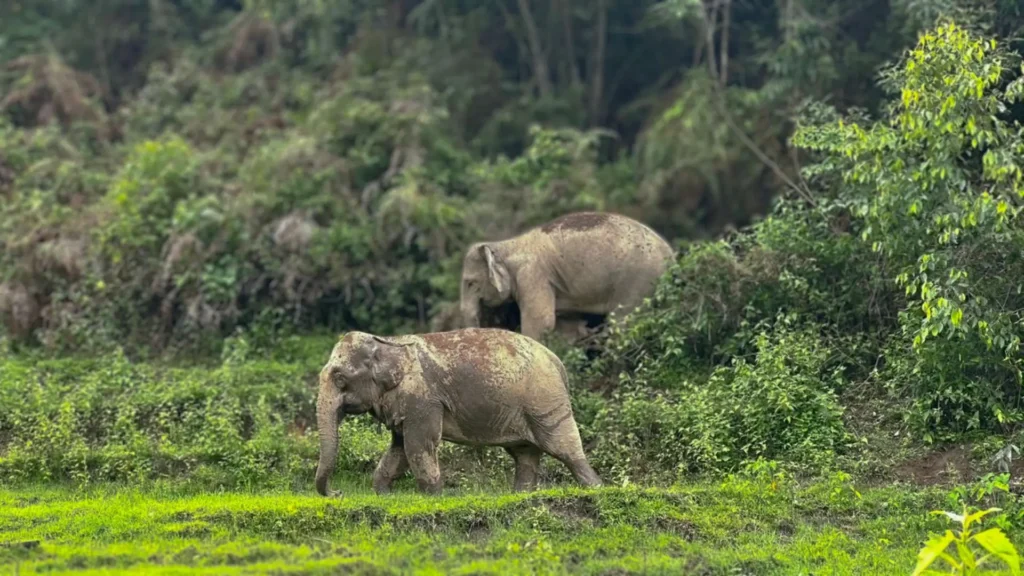
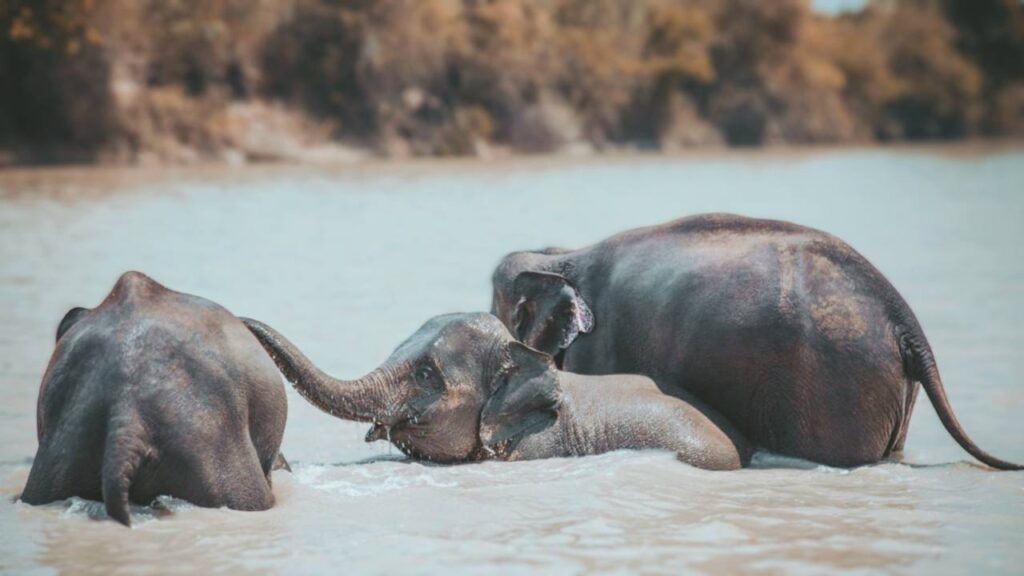
Elephants are woven into the heart of Thai identity — a national symbol, a sacred figure in Buddhism, an emblem of royalty, and once a warrior in battle. The white elephant is so revered it appeared on the national flag, and Thailand honours the animal every year on National Elephant Day, March 13.
Travel anywhere in Thailand and you’ll see elephants — in temple carvings, on souvenirs, even folded into towels on your hotel bed. Here’s why they mean so much.
The elephant is Thailand’s national animal
The Thai elephant, or chang Thai, is the country’s national animal, and the white elephant in particular is its national symbol. That status was formalised when the white elephant was designated the national animal on 13 March 1963 — the same date later chosen for National Elephant Day.
White elephants and royalty
White elephants (rare, pale-skinned elephants) are considered sacred and have symbolised royal power for centuries. Thai kings historically kept them as a mark of their authority to reign. The reverence ran so deep that a white elephant featured on the flag of Siam for about a century, from around 1817 to 1917, and it still appears on the ensign of the Royal Thai Navy today.
Elephants in Buddhism and Hindu tradition
The elephant’s sacred status is tied to religion. In Buddhist legend, the Buddha’s mother, Queen Maya, is said to have dreamed of a white elephant before conceiving him. In the Hindu-Buddhist tradition that also runs through Thai culture, Erawan (Airavata) is regarded as the lord of all elephants, and the elephant-headed god Ganesh — known in Thai as Phra Phikanet — is revered as a bringer of wisdom and success. You’ll spot elephant imagery at temples and shrines across the country.
From war elephants to working elephants
Elephants weren’t only symbolic. For centuries they carried kings and warriors into battle, and later became the backbone of Thailand’s logging and transport industries, hauling timber through forests no machine could reach. This long working partnership is why the bond between Thai people and elephants runs so deep.
Elephants in Thailand today
That history has a bittersweet present. Thailand’s forests once held perhaps 100,000 elephants; today only a few thousand remain in the wild. When commercial logging was banned in 1989, many working elephants moved into tourism — for better and worse. Honouring the elephant’s cultural place now means protecting its welfare: choosing ethical, observation-only sanctuaries over rides and shows, and supporting the communities and rescue efforts that care for them.
Frequently asked questions
Why are elephants important in Thailand?
Elephants are Thailand’s national animal and a symbol of royalty and Buddhism. They served in war, logging, and transport for centuries, forging a deep cultural bond.
What is a white elephant in Thai culture?
A white elephant is a rare, pale-skinned elephant considered sacred and symbolic of royal power. Thai kings historically kept them as a sign of their authority.
When is National Elephant Day in Thailand?
March 13 each year. It was established in 1998 to honour the elephant’s cultural importance and promote conservation.
Why do elephants appear in Thai temples?
Because of their sacred role in Buddhist and Hindu tradition — including the legend of the Buddha’s mother dreaming of a white elephant — elephant imagery is common at temples and shrines.
Honour the elephant the ethical way
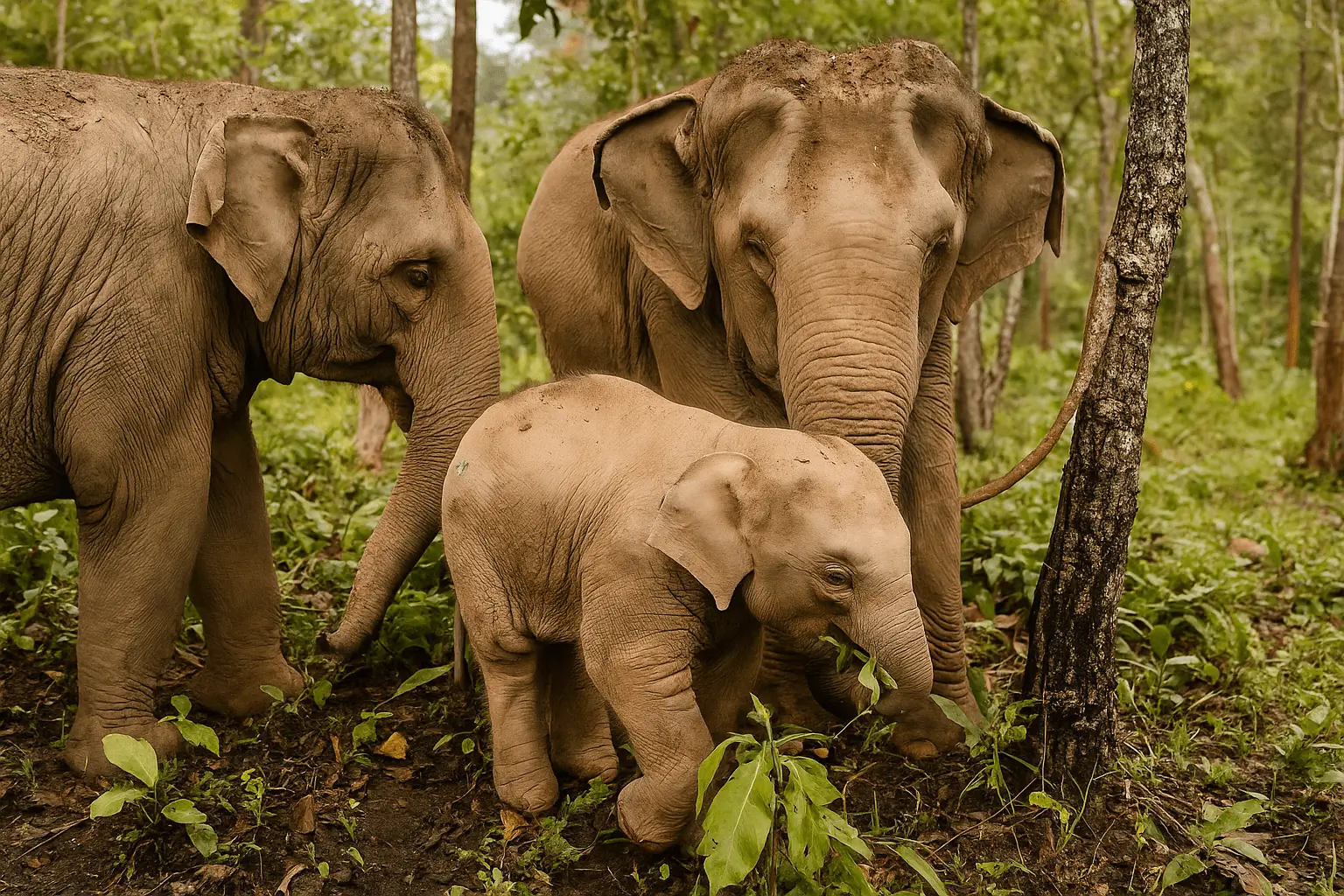
See Thailand’s revered giants living freely at EVE79 — rescued elephants, observation-only, transport from Chiang Mai included. Book your visit.

 Spots are limited — secure your experience now.